
Low Muscle Tone and why we should encourage children to be active
By Ofra Sharp and Ma’ayan Hamilton / November 2023
In this blog we will start by looking at the two types of irregular muscle tone: hypertonia and hypotonia. We will spend a bit more time focusing on hypotonia, more commonly known as low muscle tone, as it often occurs in babies and children.
We will also look at the importance of encouraging your babies and toddlers to be active, and why too much screen time is detrimental for their growth and development.
What is muscle tone?
Muscle tone refers to the amount of resistance to movement in our muscles. Muscle tone is our body’s response to force. Normal muscle tone allows us to maintain our posture, and to move our arms and legs in a smooth and coordinated manner.
Movement and correct muscle tone are very important when it comes to young children and their development. Babies and toddlers are constantly learning about themselves and their environment through the way in which their physical body interacts with the world around them. If there is a problem with a child’s muscle tone, then all these interactions will be affected. This will then affect various aspects of their development, especially their physical development.
There are two main categories of irregular muscle tone: hypertonia and hypotonia. We will briefly describe hypertonia, but will spend a bit more time unpacking hypotonia, or ‘low muscle tone’ since it is more frequently seen in babies and toddlers.
What is Hypertonia?
Hypertonia is when a baby or toddler effectively has ‘too much’ muscle tone. A baby with hypertonia will have muscles that are excessively stiff, causing difficulty with range of movement. There are different types of hypertonia, including spasticity, rigidity and dystonia.
Hypertonia is usually related to one of the following:
- Structural abnormalities in the brain (cerebral palsy)
- Meningitis or inflammation of the brain
- Genetic or metabolic abnormalities
- Anything that causes increased pressure in the brain, such as tumors or strokes.
Treatment for hypertonia is specialized and will require the assistance of a trained pediatric occupational therapist or pediatric physiotherapist. They will provide the child with exercises and stretches which can help to maintain as much movement as possible.
What is Hypotonia?
Hypotonia, also known as ‘low muscle tone’ is when a baby has ‘too little’ muscle tone. These babies are floppy, and they don’t show resistance when their joints are moved.
Hypotonia is present at birth, and a qualified health care professional will usually be able to diagnose this before a child reaches 6 months. Hypotonia is the most common condition that affects a new born’s movements and motor skills.
What are the signs of low muscle tone in babies toddlers?
Here are some of the signs that the health care provider will look for in babies before making a diagnosis of hypotonia:
- Feels limp when held
- Struggles to suckle or feed
- Has a very weak cry
- Arms and legs hang straight down without a bend at the elbow or knee
Some babies are not diagnosed early on, and their low muscle tone will go on to affect the development of their physical and motor skills, such as crawling, sitting upright, feeding themselves and saying their first words. Over time, parents may become concerned about their child’s development patterns and decide to seek out the opinion of a pediatrician.
If your child has not been diagnosed with low muscle tone as an infant, but you are still concerned about their physical and motor development, it is possible that their hypotonia has gone undetected. Here are some of the common signs of low muscle tone in toddlers and young children:
- Excessive fidgeting during inactive periods
- Difficulty hopping, skipping or running
- Clumsy and often bumps into things
- Falls often
- Avoids activities requiring balance
- Seems lethargic and tired more easily than their peers
- Avoids climbing and playing on jungle gyms
- Struggles to keep body supported when sitting on a chair, may hook legs around the legs of the chair
- Colours in very darkly or lightly
- Speaks in monotone voice
Remember that these are just some of the signs, and that you should always take your child for an assessment by a pediatrician or occupational therapist if you have any concerns about your child’s development.
Will my child’s low muscle tone improve?
Unless it is caused by serious brain damage, most children with low muscle tone are actually able to improve their muscle strength over time, as long as your child gets plenty of physical activity.
The difficulty is that most toddlers with low muscle tone need to put in more effort to engage their physical bodies. For this reason they may seem to resist engaging in physical activities. But physical movement and activity is exactly what they need!
There are lots of fun activities that you can engage your child in to help them. Be creative in your ideas and try to find things that will appeal to your child so that they are encouraged to stay active.
Here are some ideas for parents:
- Rolling and squeezing play dough to help develop muscles of the hand and forearm
- Sit on an exercise ball and bounce up and down to help develop core stability
- Make an obstacle course in the house where children must climb under chairs and tables, and over couches and tables
- Play gentle wrestling games on the ground – provide just enough resistance so that your child is required to engage their muscles and move around
- Play ball games such as kicking, throwing and catching
- Use a towel to play tug of war
Is screen time for toddlers really a problem?
The short answer is yes, too much screen time really is a problem!
There are a few reasons why you should try to avoid letting your child spend too much time in front of the television or playing on their devices:
- Too long in one position is bad for your posture
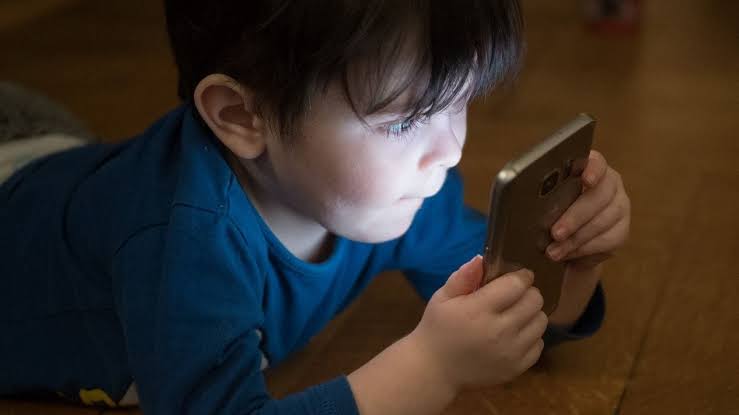
Children are more likely to spend long periods of time sitting in one position when in front of a screen. Very often this is in a posture that is encouraging or reinforcing poor body alignment. For example, slouching when sitting in front of the TV, or hunched over shoulders when playing games on a phone or iPad.
- Tech Nech
Neck problems are becoming more and more of an issue for those who spend too much time in front of computers, smartphones and tablets. There is even a name for it – ‘tech neck’, and sadly as many children as adults are suffering from tech neck these days. Tech neck is caused by stress on the cervical spine due to a flexed and forward head position that one engages in when looking down at screens.
- Decreased time playing and being physically active
Screen time takes away from valuable play time – being outdoors, climbing jungle gyms, running around… all of which will help to develop your child’s muscles, coordination and balance.
What else can parents do to help?
If your baby has a low tone tendency, it is very important to give them as many opportunities as possible to engage their physical body. Try to avoid keeping your baby in an infant carrier or carrying them around too much as this will deprive them of time in which they could be developing their physical body.
Babies need to have plenty of time on their tummies and backs, reaching out and eventually crawling around. All of these will help the development of their muscles and lead to better posture, neck and head control and core stability.
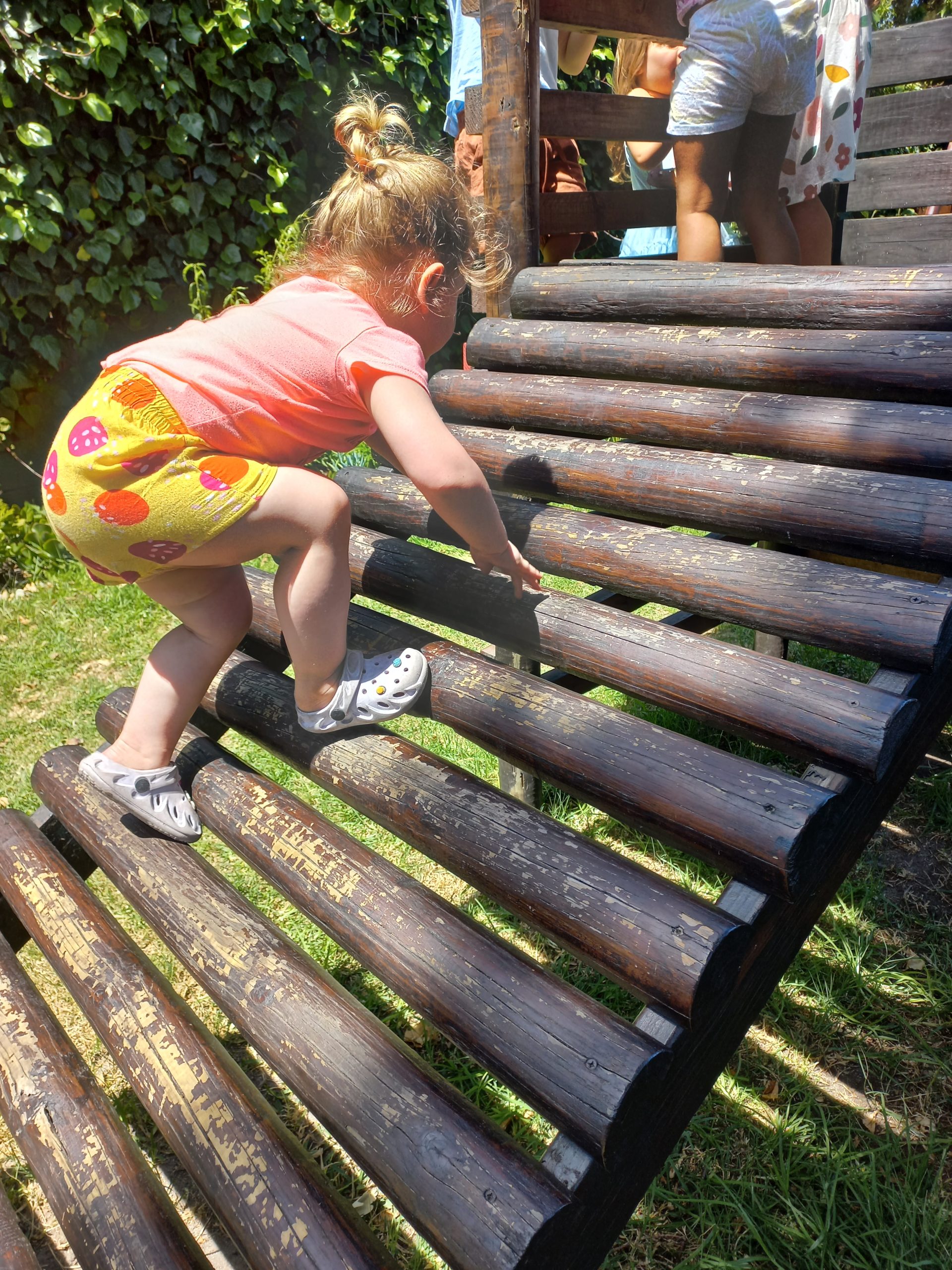
Toddlers and young children should be encouraged to climb jungle gyms, play in the garden, and engage their bodies as much as possible. As the toddler moves through, under and over things, they will learn about concepts of height, distance and depth.
Conclusion
Remember to always consult a qualified health care practitioner if you have any concerns about your baby or toddler’s physical development. When it comes to low muscle tone, early intervention and engaging your baby or toddler in appropriate physical activities and exercises is especially important.
Remember that in order for your child’s muscles to develop, they need to be active. In babies this means plenty of tummy and back time, opportunities to reach out for things and move freely. Too much time in baby carriers, prams and baby chairs will prevent your little one from being able to engage their physical body properly.
For toddlers and young children, time playing on jungle gyms, running around outdoors, doing obstacle courses and playing with balls is essential for their muscles to develop. Without enough activity their strength, posture and balance will be negatively affected. Remember to try to avoid too much screen time as this can reinforce bad posture and is also taking away from essential opportunities for your child to be playing in ways that use and develop their whole body.
About the authors
Ofra Sharp
Ofra Sharp is the founder and owner of Little Acorns PlayGroup and Time2gether Activity Workshops. Ofra has many years of experience working with children of different ages, and their families. Ofra has a deep knowledge and understanding of the importance of early childhood development. Her qualifications include:
FDE Junior Primary (CCOE, UCT)
Advanced Play Therapy (Red Shoe)
Counselling 1 and 2, and trauma debriefing certificates (FAMtrac)
Ma’ayan Hamilton
Ma’ayan is a co-owner of LIttle Acorns PlayGroup where she is also involved as a teacher assistant. Ma’ayan qualified with a Bachelor of Science in Occupational Therapy in 2008, after which she furthered her studies as a TRE provider. Ma’ayan has a deep understanding of early childhood development, as well as the psychosocial needs of young children. Ma’ayan has three children of her own and has many years of hands-on experience with young children. Her qualifications include:
B.Sc. Occupational Therapy (University of Cape Town)
TRE provider (TRE Global Certification Training)