
Teaching Children To Be Responsible
By Ofra Sharp and Ma’ayan Hamilton / February 2024
Introduction
Preparing young children for success in life involves teaching them responsibility. Studies have shown that allowing children to complete age-appropriate tasks and chores from a young age, helps to develop their confidence, self respect, self-reliance and perseverance.
Instilling a sense of responsibility in children is not always easy and can be frustrating, and take a lot of time. Nevertheless, parents are encouraged to persevere, as the skills cultivated will aid your child’s growth into a responsible teenager and adult, reducing the likelihood of entitlement and expectations that others will do everything for them.
What is responsibility?
Before exploring ways to instill responsibility in children, let’s consider what responsibility entails.
Responsibility involves being able to recognise and accept one’s duties and obligations, and being able to act accordingly.
A responsible person is dependable, reliable, makes good choices and takes accountability for their actions.
Having a sense of responsibility also means upholding good values, such as honesty and integrity.
Being responsible is not just about fulfilling duties, it is also about feeling a sense of personal achievement from completing tasks, taking care of one’s body and belongings, and having a greater sense of self respect.
Responsibility and Respect
Parents have the greatest influence on their children, who learn primarily through observation and modeling. When teaching responsibility, maintaining an attitude of respect towards your child is crucial.
Respect their efforts to complete a task, acknowledging that it is a process with ups and downs. There will be mistakes and failures along the way, but it is through these experiences that they learn and grow. Trust their learning process, and always try to support and encourage them with compassion.
Age-Appropriate Expectations
Teaching responsibility should involve teaching them about age-appropriate care and respect for:
- themselves
- other people
- animals
- their environment
- their belongings
Cultivating awareness in these areas helps children become more considerate and dependable members of society later in life.
Tips for Developing Responsibility in Children
Teaching responsibility requires mindfulness and patience from the parent. It will take time, and some children seem to develop more quickly than others. Stay positive, even when it doesn’t seem like your child is becoming more responsible. Continue to reinforce the foundations, and you will eventually see your efforts have been worth your time and energy.
Here are some suggestions for successfully teaching your child responsibility:
Model responsibility
Model responsibility for your child from a very young age while still remembering to have realistic expectations of your little one.
Age-Appropriate Expectations
Set realistic expectations according to your child’s age, with evolving expectations as they grow.
At the end of this blog we have a few ideas of age-appropriate tasks and chores, and ways in which your child can take on responsibility within the home.
Praise is very important to children! Recognise and acknowledge their efforts and positive attitude, even if the task is not done ‘perfectly’.
Ignore Mistakes and Focus on the Positive
Try to ignore mistakes or failure. Praise their effort and their helpful attitude. Giving positive feedback will bring your child’s focus to their feeling of success and achievement, and that will motivate them to try more.
For example, if you ask your child to fetch 4 spoons to help set the table, and they return with 3 spoons, rather than pointing out what they forgot, praise them for what they remembered.
Express Your Gratitude
Express genuine gratitude for what they have done. “Thank you for helping me, I really appreciate it.” or “Thank you, that was so helpful.”
When a child feels seen and acknowledged, it helps to develop their self-confidence. A confident child who believes in themselves (in their ability to get things right as well as to learn from their mistakes) will be more comfortable to take responsibility as they are not held back by insecurity and fear of failure.
Be Consistent
Be consistent with what is expected of them. If they forget you can gently remind them. For example: “Do you remember you have to be the one who picks up all the books for the floor?” or “Do you remember you have to help me put all the teddies in the right place before we can go outside to play?”
If you are consistent it will also teach them to be consistent.
Start small
Start with small or less demanding chores. This will give them a sense of accomplishment and belief in their ability. If the task is too big or tedious, then they will not persevere.
Make It Meaningful
Offer your child opportunities to help in a way that is meaningful for the family and the home. To help develop your child’s intrinsic motivation, it is important that they see that the things they do matter and can positively impact those around them.
Natural Consequences
Allow your child to experience the natural consequences of their behavior, both positive and negative. Natural consequences that are age appropriate will teach them valuable lessons and the need to follow through and complete tasks.
Routines and Rewards
Routines and rewards can help motivate the child and instill habits of responsibility as well as teaching consequences. One wants to reinforce the thought process: “When I do my task I get acknowledged /rewarded. When I forget or don’t do it I don’t get rewarded”.
You may decide to set up a reward system, such as a money jar, and each completed task earns some reward (e.g.R1/ R2 /R5). Refusal to complete a task, or forgetting to do something (only for older children) may then mean an amount is taken out of the jar.
The same principle can be applied to rewards such as outings, toys that your child wants, or any other reward that suits your family values.
Age-Appropriate Tasks and Chores for Children
Here are some age-appropriate tasks and household activities which children can be expected to do from a young age. The earlier you start, the more likely your child will be to take on more responsibilities as they get older.
18 months – 2 years old:
- Hand parent toys to pack away.
- Help wipe the play table.
- Wash hands before meals.
- Be gentle to pets.
- Listen and not touch things such as hot stove, mum’s make-up etc.
2-3 years old:
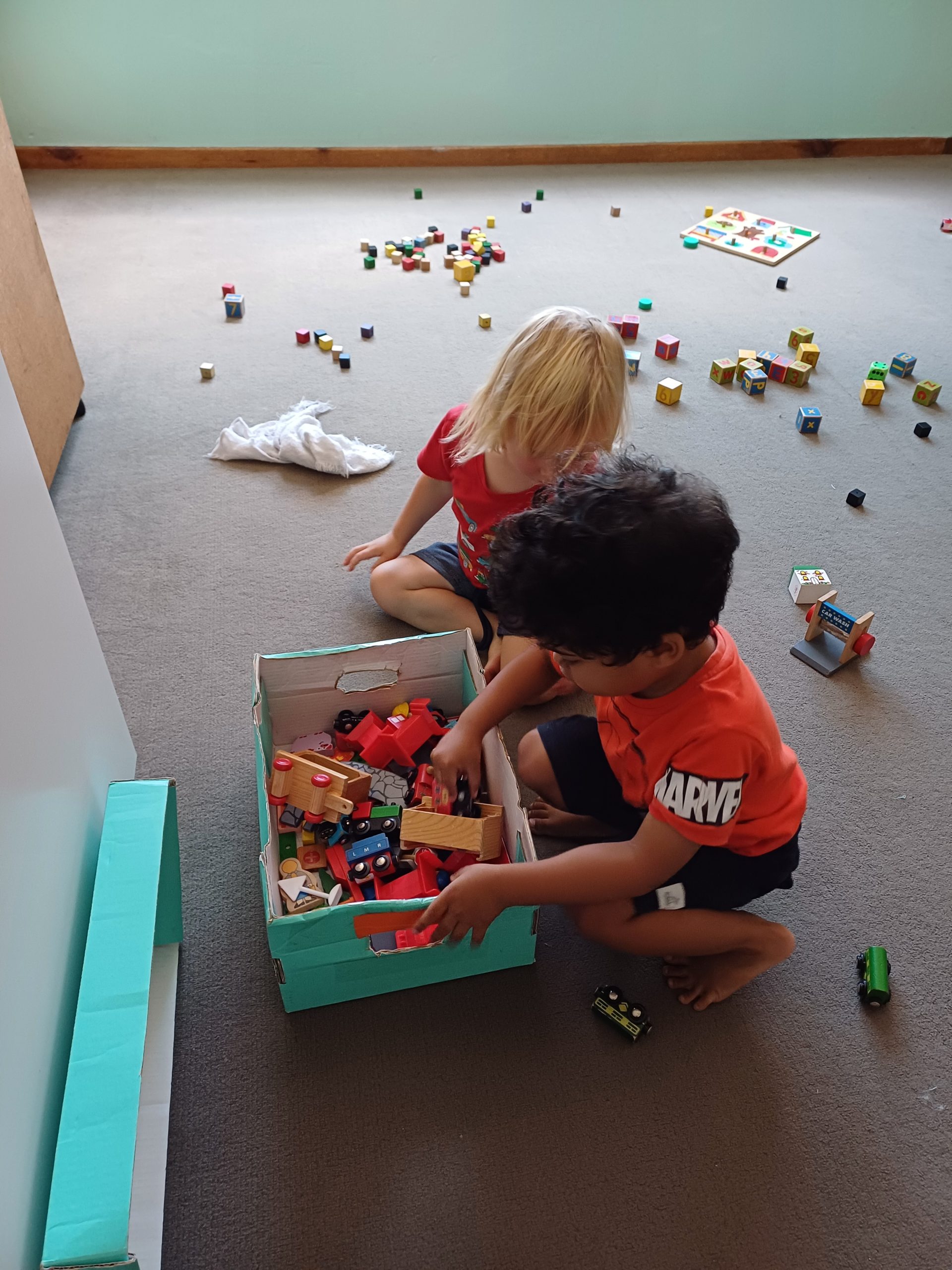
- Help pack toys away.
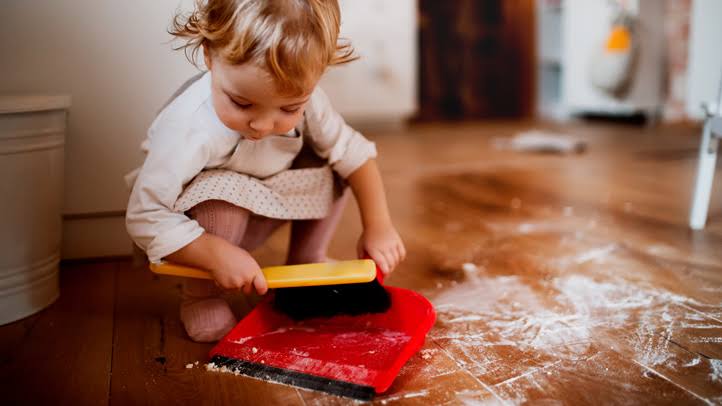
- Help wipe tables and own mess/spills.
- Share some of their toys.*
- Wash hands before meals.
- Helps to water the garden.
- Helps feed pets (together with parents).
- Plays with pets.
*Do not force your child to share all of their toys. This may upset them and make them feel as if their needs to keep some things private are not being respected. A child who does not feel respect from others for his belongings will not respect the belongings of others.
3-4 years old:
- Wipe spills
- Help set the table.
- Feed pets.
- Help clear the table after a meal.
- Tidy own room/ toys/ books.
- Remember to pack things in their school bag at school.
- Remember to put away shoes and dirty clothes in the correct place.
- Responsible for matching socks from the laundry basket.
- Water plants.
- Put on their own shoes.
5-6 years old – as the above but without having to always be reminded, as well as:
- Help with basic food preparation tasks, such as scrambling eggs (all kitchen activities done with adult supervision)
- Cut soft vegetables and fruits, such as avocado.
- Set and clear the table.
- Help fold towels.
- Help with sweeping – house, yard, drive-way.
- Help walk and play with the pets.
- Soap self in the bath/shower.
- Remember to pack their school bag.
- Dress themself (but often still need some help).
Conclusion
Whatever the task, remember to keep a consistent routine. It might be necessary to repeat reminders, especially with younger children.
From a young age, you can start teaching your child about giving, being kind, and working towards a goal. Try to make the process as positive and fun as possible!
Remember that you are laying the foundations for the rest of your child’s life. As the parent you can help them to develop confidence and respect for themselves, others, and the world around them.
Learning to be responsible takes time, and may come more naturally to some children than others. Try to persevere, because the skills that you can instill in your child will help them grow into dependable and responsible adults.
About the authors
Ofra Sharp
Ofra Sharp is the founder and owner of Little Acorns PlayGroup and Time2gether Activity Workshops. Ofra has many years of experience working with children of different ages, and their families. Ofra has a deep knowledge and understanding of the importance of early childhood development. Her qualifications include:
FDE Junior Primary (CCOE, UCT)
Advanced Play Therapy (Red Shoe)
Counselling 1 and 2, and trauma debriefing certificates (FAMtrac)
Ma’ayan Hamilton
Ma’ayan is a co-owner of LIttle Acorns PlayGroup where she is also involved as a teacher assistant. Ma’ayan qualified with a Bachelor of Science in Occupational Therapy in 2008, after which she furthered her studies as a TRE provider. Ma’ayan has a deep understanding of early childhood development, as well as the psychosocial needs of young children. Ma’ayan has three children of her own and has many years of hands-on experience with young children. Her qualifications include:
B.Sc. Occupational Therapy (University of Cape Town)
TRE provider (TRE Global Certification Training)