
Learning Language starts with Hearing and Listening
As parents, you are your child’s first ‘speaking model’. During the first years of their lives, children soak up the sounds they hear and the language they are exposed to like sponges. It is not possible for you to talk to your children too much during these early preverbal stages.
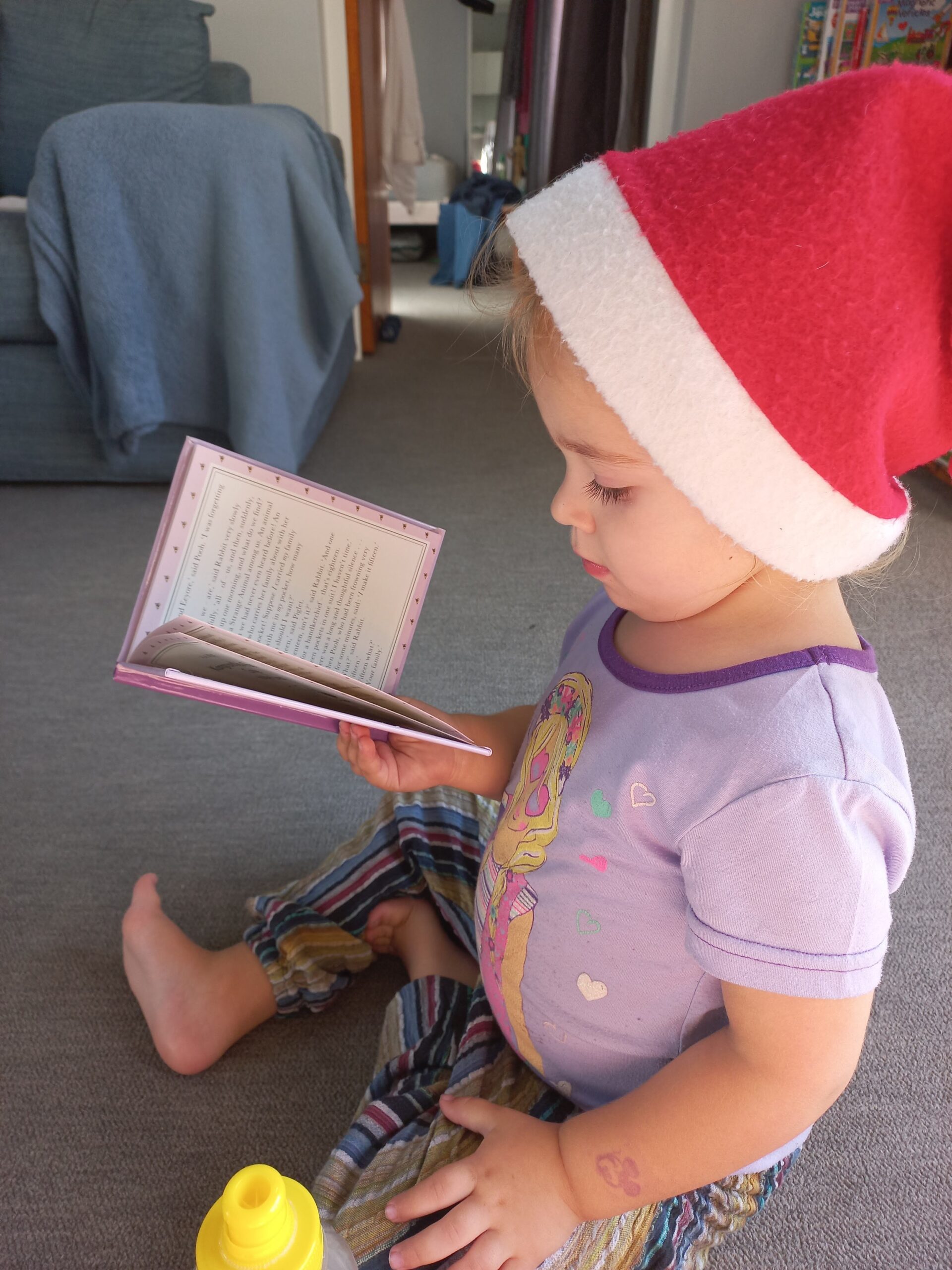
Children associate sounds with experiences of touch, sights, and actions. The best way to help them create associations with words is through the use of visual imagery. Books with pictures, tactile textures, and sounds are all wonderful ways to encourage their connection with words and language.
For example, if there is a picture of a sheep in a booking, you can start by naming the animal and imitating its sound. Allow your child to feel the woolly body of the sheep and put words to their experience: “Now you are feeling the woolly sheep, it is so soft and fluffy”. The strong association of the word when integrated with the other sense creates an imprint of memory in your child’s mind.
Try to avoid “baby talk” when speaking to your newborn or toddler. For example, instead of “boti-boti” you could say “It is time for your bottle”. And instead of “doo-doo time” you could say “Let’s go to bed now.”.
Remember that even though your child is not yet speaking, these early experiences are the roots that form the foundation of their speech and language development.
Speech Milestones
It is important to remember that speech development varies from one child to another. Do not worry if your child does not fit these milestones exactly, they are simply a guideline. Children also learn in different ways, for example: some are more visual learners, some auditory learners, and others learn through tactile and sensory experiences.
Your child’s verbal skills will progress at their individual pace, however speaking clearly to your child, reading to them, and using rhyming words will all help their speech and language development. It is also helpful to use words to describe or name their nonverbal communication, for example when they point at an object you can say: “Yes, this is an apple.”.
2 years old:
At his age, your child can understand a lot of words and may even be able to use about 50 words. Your child may refer to themselves by name instead of ”I” or “me”.
Your child will begin to construct sentences using 2 – 4 words. You may not always understand the words – but that is okay! Often parents understand their child’s words more than other people.
Your child might also swap difficult sounds for easier ones, for example saying “tat” instead of “cat”. They may also drop syllables or shorten longer words, such as saying “brella” instead of “umbrella”.
3 years old:
At this age, your child will begin to be understood by other people. This is often the first stage of conversation, asking questions and extended listening skills.
They begin to use words from their favourite rhymes and songs in their daily speech. They may ask context questions about a story and are able to focus for longer listening to a story.
Your child’s grammar may not be correct at this age, for example they may say “I did go” or “I goed” instead of “I went”. They may also still mispronounce some words.
4 years old:
By the age of 4 years, most children know about 500, and their grammar is gradually improving.
At this age, they are able to use language to plan activities and communicate problems. You may find that your child’s imagination and facts become mixed up when they describe past events. Your child will also start developing a sense of humour and simple jokes are often enjoyed.
Children of this age may still mispronounce words, or mix sounds, such as ‘f’ and ‘th’, or ‘r’ and ‘w’. Long or difficult words are often mispronounced. Parents should try and repeat these words slowly, or break them down into 2 to 3 parts. For example “discover” can be broken into “dis – cover”, or “possibility” can be broken into “poss – i – bility”.
Final thoughts
Parents are encouraged to try and speak to their children face-to-face as much as possible. This allows your child to see the movements of your mouth as well as your facial expressions.
Between the ages of 2 and 4 years, parents should refrain from correcting their child directly. They can rather demonstrate the correct use of language by repeating what their child has said correctly. For example if your child says “I goed to shop yesterday” you could say to them: “Yes, you went to the shop yesterday”.
Remember that your child is learning, and that they will do so at their own pace. These milestones are a guideline and there will be many variations from child to child. Don’t worry if there is a delay in speech. Some children’s brains are wired to take in a lot of information before using it. So although they may start talking only later, when they do start they have a wide and rich vocabulary.