
Understanding your child’s sensory world and how it affects their wellbeing
Part 3 of 3: Signs of Sensory Processing Difficulties in Children
By Ofra Sharp and Ma’ayan Hamilton / September 2023
Sensory integration is an important aspect of your child’s growth and development. It plays a crucial role in how they perceive and interact with the world around them. This is Part 3/3 of our series on Sensory Integration. If you have not already done so, we suggest that you take a few minutes to read through Part 1: Understanding Your Child’s Sensory World and How it Affects Their Wellbeing and Part 2: Habituation and the Importance of a Sensory Diet.
In this blog we aim to provide you with some of the early warning signs that might indicate that your child has difficulty with sensory processing.
It is important to note that this blog is not a diagnostic tool but rather a guide to help identify potential areas of concern.
If you do have any concerns that your child might be struggling with sensory processing, then we strongly urge you to seek appropriate professional help from a Paediatrician or an Occupational Therapist.
Sensory Integration and Sensory Modulation
Sensory integration refers to the brain’s ability to process and make sense of the information received from our senses – touch, taste, smell, sight, hearing, vestibular, and proprioceptive.
Sensory modulation is about filtering out irrelevant information and focusing on what’s important in a given situation. It’s like your brain sorting through an enormous amount of input and deciding what to ignore and what to act upon.
Part 1: Understanding Your Child’s Sensory World and How it Affects Their Wellbeing goes into additional detail about these concepts if you wish to read more about them.
Problems with Sensory Processing
Sometimes babies and toddlers display signs of difficulty with processing and/or modulating sensory input. Early detection and intervention will mean that you are able to provide your child with the appropriate support and care they require for their well-being and development.
Difficulties with processing sensory information can be an indication of another underlying issue, such as Sensory Processing Disorder (SPD), Autism Spectrum Disorder (AUD), dyslexia, or Attention Deficit and Hyperactivity Disorder (ADHD).
Without appropriate intervention, this can lead to your child having more significant challenges in their daily life, affecting their behaviour and how they experience the world around them.
Hyper vs. Hypo-sensitivity
Difficulties with processing and modulating sensory information can be broadly categorized into two types – hypersensitivity (overactivity) and hyposensitivity (underactivity).
Hypersensitivity refers to an overactive response to sensory input. Children with hyper-sensitivity may be more easily distracted, exhibit heightened sensitivity to noises, struggle with concentration, and find it difficult to filter out irrelevant sounds. They might also be very sensitive to bright light, textures of fabrics, and certain odors. Such children may avoid touching others, resist messy play, and display heightened responses to pain.
On the other hand, hyposensitivity is characterized by an underactive response to sensory stimuli. Children with hyposensitivity may move around constantly, seek constant physical touch, enjoy loud volumes, and exhibit high pain tolerance. They may also have a tendency to bump into things or people due to reduced awareness of their surroundings.
What about Neurodiversity?
Neurodiversity is a concept that recognises and celebrates the natural variation in human neurological functioning, including sensory processing. It emphasizes that there is no one ‘normal’ or typical way for the brain to work. It suggests that differences in neurology, such as those found in individuals with ASD, ADHD, and dyslexia, are simply variations of human experience.
Advocates of neurodiversity argue for acceptance, respect, and accommodation of these diverse neurological profiles. This is different from the traditional views that pathologise neurological differences.
It is helpful to keep the concept of neurodiversity in mind when approaching sensory issues in babies and toddlers. Remember that the aim of identifying concerns or issues is so that appropriate support and care can be given to a child who has been born into a society that is still in the process of being inclusive of people who are neurodivergent.
Just like in biology, a healthy ecosystem can only exist with a wide variety of biodiversity, it has been said that a healthy society requires the presence of neurodiversity. One of our roles as parents is to create awareness so that there is more space for the adaption of environments and inclusion of all children, regardless of their neurodiversity.
Signs of Sensory Processing Difficulties in Babies and Toddlers
As a parent or caregiver, you may notice unusual behaviours and tendencies in your baby or toddler. Often, these are normal aspects of learning and development. But sometimes they can be an indication that there is an underlying issue.
You may become appropriately concerned when your baby or toddler displays a particular behaviour or early warning sign over an extended period of time. If your baby is sick then they are more likely to fuss frequently, be sensitive to bright lights and sound, and refuse to eat. However, as the illness passes, the baby’s fussing and unhappiness should pass too.
It is also important to remember that every person exists on a spectrum between sensory avoidant and sensory seeking, and some people are on both sides of the spectrum for different things. This does not necessarily indicate a sensory processing disorder. However when the sensory avoidant or sensory seeking behaviour is excessive and interferes significantly with the child’s growth, development, and safety, including social and behavioural aspects, then it is wise to seek professional assistance.
We have compiled a list of some of the signs that parents can look out for in their babies and toddlers. Please remember that this is just a guide and not a diagnostic tool. Only an appropriately trained professional will be able to make a full assessment and diagnosis.
If your baby is over 6 months old and displays more than two of the signs listed below over an extended period of time and in the absence of illness, you may want to take them for a professional assessment by a paediatrician or an occupational therapist. For older toddler and children you may also be referred to a paediatric psychiatrist.
The most common response in babies who are overstimulated is fussing and crying. When babies fuss they might arch their back, turn their heads or bodies away from the offensive stimuli, stiffen their muscles, cry, or scrunch up their faces. It is equally concerning if a baby or toddler seems unresponsive to stimuli. For example, they don’t flinch or cry when hurt, don’t respond to loud noises or bright lights, and never fuss even when you expect that they are uncomfortable.
Some of the behaviours below are sensory seeking (a response to hypo-sensitive), and some are sensory avoidant (a response to hyper-sensitivity). In their extremes, both of these can be of concern.
For example, a sensory-seeking toddler will want to constantly touch everything in sight, often putting inappropriate things in their mouth. A sensory-avoidant toddler will refuse to touch certain textures or fabrics. While both of these can be normal responses, we become concerned when they show an enduring pattern of behaviour that interferes with normal healthy growth, development, and safety. Remember that all babies and toddlers are likely to display one or two of the items on this list. If your child is displaying more than this then it would be helpful to take them for further assessment.
Checklist for Difficulties with Sensory Regulation or Processing
Sound
- Little or no babbling as a baby, and delayed speech as a toddler
- Startles easily by loud sounds
- Can’t handle loud sounds out of their control but doesn’t mind if they are making a loud noise themselves
- Seems totally oblivious to sudden loud sounds
Touch
- Overly sensitive to touch
- Dislikes being held
- Cries excessively during activities such as washing hair or face
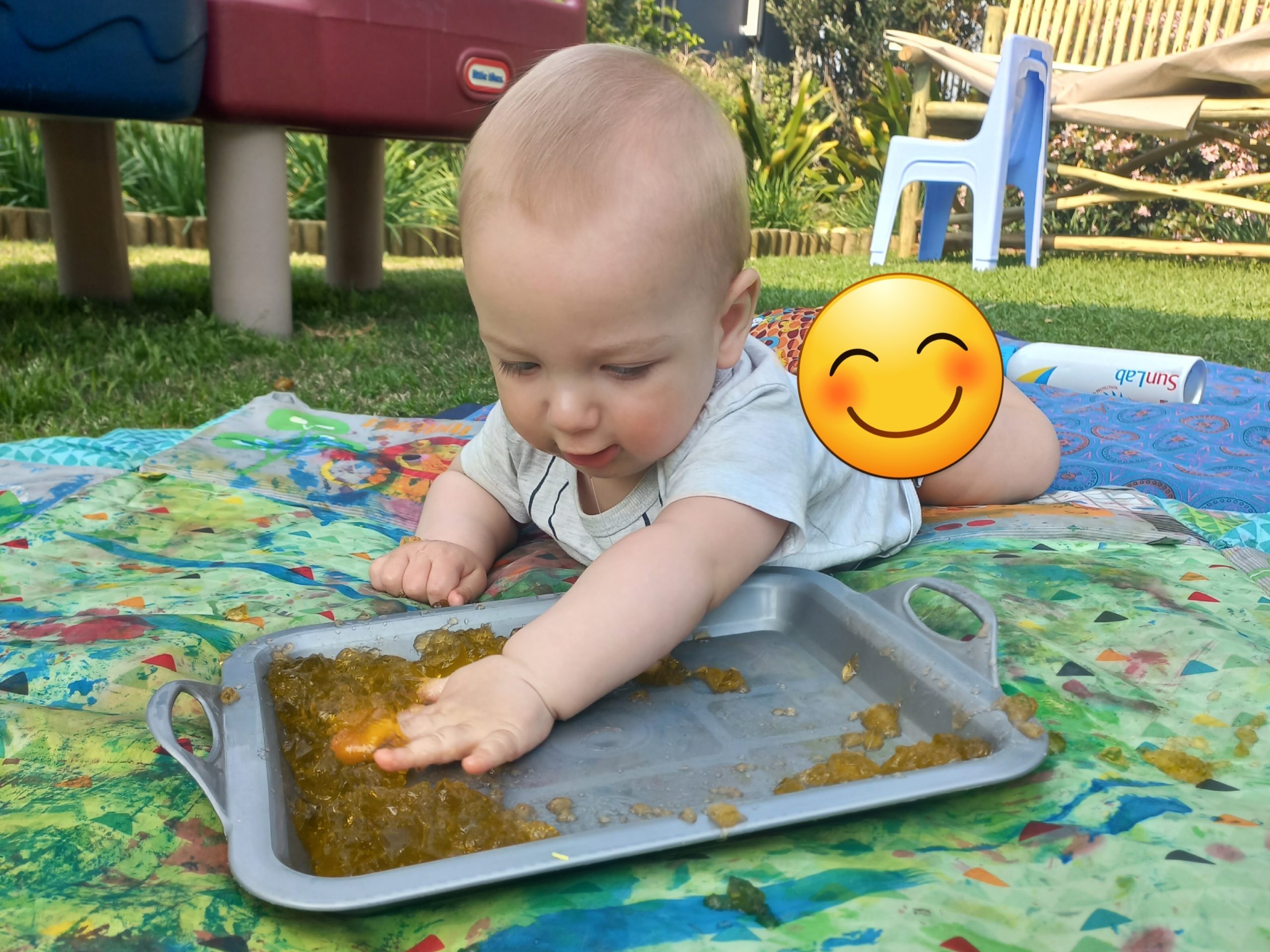
- Resists messy play activities (glue, sand, paint)
- Avoids certain textures or fabrics
- Low sensitivity to pain or temperature (appears totally unaffected when they fall or bump themselves)
- Constantly seeks out physical contact
- Seems to deliberately bump into people and things
- Touches everything, seeking out different textures
Sight
- Difficulty making or maintaining eye contact
- Very sensitive to light
- Distracted in busy places, and quickly becomes overstimulated
- Appears to frequently stare or gaze into space for extended periods of time
- Appears oblivious to bright flashing lights or very busy places
Feeding and Smell
- Gags often
- Avoids new food textures and tastes
- Refuses to feed or eat
- Very distressed by unfamiliar smells
- Constantly eating or putting things in their mouth, not driven by actual hunger
- Seeks out strong tastes or smells that are unusual for babies or toddlers
Sleep
- Restless or fussy when sleeping
- Wakes frequently during the night
- Takes a long time to settle at nap time (more than 30 minutes)
- Sleeps excessively
Movement, coordination and position in space
- Does not tolerate being held in unfamiliar positions
- Delayed physical milestones (such as rolling, crawling or walking)
- Difficulty with fine motor skills (such as drawing)
- Accident prone
- Clumsy and often bumps into things
- Avoids swings or climbing on jungle gyms
- Takes excessive risks, for example on jungle gyms (jumping from dangerous heights)
- Constantly hangs on other people or furniture even when in a familiar environment
Emotional and behavioural – Babies
- Easily distressed
- Cries or fusses frequently
- Often irritable or unhappy
- Never distressed
- Never cries or fusses
- Shows no emotional responses
Emotional and behavioural – Toddlers
- Mood swings
- Frequent tantrums due to sensory overload
- Inability to make friends or be part of a group
- Uncooperative
- Disruptive
- Unable to stop themselves from touching other people even when told to stop
- Can’t sustain attention on one activity – constantly moves from activity to activity
- Does not express emotions
Treatment Options
Occupational therapy is the most common treatment for babies and toddlers who struggle with sensory processing. Your pediatrician may also refer you to other specialist therapists, such as a paediatric psychiatrist. Before receiving treatment, one of these professionals will engage in appropriate comprehensive assessments to identify specific areas of concern which will guide the treatment process.
Conclusion
Sensory integration and modulation are fundamental aspects of a child’s development, shaping how they experience and interact with the world. The checklist provided, while not a diagnostic tool, can be used by parents to decide if they should seek additional professional assessment.
The concept of neurodiversity inclusion is steadily growing, with more attention being given to the importance of recognising and supporting neurodivergence in children and adults.
The lists provided here are not exhaustive, and there may be other signs that you pick up as a parent or caregiver that are of concern to you. Always trust your instincts and seek out professional assistance if you have concerns. Underlying illnesses may also present as sensory sensitivity, so it is best to check with your pediatrician.
Remember, every child is unique, and being attuned to their sensory experiences and developmental needs will contribute to their overall growth and wellbeing.
About the authors
Ofra Sharp
Ofra Sharp is the founder and owner of Little Acorns PlayGroup and Time2gether Activity Workshops. Ofra has many years of experience working with children of different ages, and their families. Ofra has a deep knowledge and understanding of the importance of early childhood development. Her qualifications include:
FDE Junior Primary (CCOE, UCT)
Advanced Play Therapy (Red Shoe)
Counselling 1 and 2, and trauma debriefing certificates (FAMtrac)
Ma’ayan Hamilton
Ma’ayan is a co-owner of LIttle Acorns PlayGroup where she is also involved as a teacher assistant. Ma’ayan qualified with a Bachelor of Science in Occupational Therapy in 2008, after which she furthered her studies as a TRE provider. Ma’ayan has a deep understanding of early childhood development, as well as the psychosocial needs of young children. Ma’ayan has three children of her own and has many years of hands-on experience with young children. Her qualifications include:
B.Sc. Occupational Therapy (University of Cape Town)
TRE provider (TRE Global Certification Training)