
Raising a Multi-lingual Child
By Ofra Sharp and Ma’ayan Hamilton / June 2023
In this blog we will explore some ideas around early development of the brain and how children learn language. We will also look at some of the benefits of raising a multi-lingual child, and offer a few tips on how to encourage language development.
Introduction – How the Brain Works
Babies are born with billions of brain cells called neurons. At birth, some of these neurons are ‘hard wired’. These neurons are responsible for controlling the bodily functions that are essential to survival.
There are many other neurons which are not ‘hard-wired’. Over time, connections form between these neurons. These connections are called synapses. By the age of 3 years old, the child’s brain has formed about 1 ,000 trillion synapses. Studies have shown that the peak production of synapses is between birth and the age of 10 years.
This means that in the first years of life there is rapid growth and development happening in the brain. The type and amount of stimulation that babies and children receive will determine which kind of synapses form in the brain.
Since it would require too much energy to sustain this ever-increasing brain growth, there is also another process of brain development which occurs called pruning. The process of pruning involves a fine tuning and paring of connections. This process is driven by sensory stimulation, interactions with caregivers and the environment, and ongoing experiences.
So how is this relevant to the topic of language acquisition and development? Because it all points to the importance of your child’s experience in their early years. And when it comes to learning languages, consistency and ongoing exposure are essential.
The more languages babies and children hear in the early years, the more synapses are formed through the tuning of their ear to the specific frequencies of those languages. And ongoing exposure will refine and enhance these connections in the pruning process.
This is important to remember when we look at language acquisition and the ability to learn new languages later in life.
Language Development
Language is the primary method of human communication.
Children who are immersed in language from birth are more likely to learn to speak well. They are also more capable of understanding when spoken to and will generally be able to adjust socially with greater ease.
These children are also more likely to be in tune with the facial expressions of others – which often give us non-verbal communication cues.
Language development also supports other aspects of development, such as cognitive and emotional intelligence. Emotional intelligence refers to the ability to express emotions and to have empathy for others. It also refers to the ability to use memory and decoding of abstract feelings and thoughts, organising them into words which can be communicated appropriately.
While there is a fairly consistent pattern that most children follow when learning to talk, the onset of verbal communication can start earlier or later for different children. One of the reasons for this is because of the different ways in which children learn, which is largely through their dominant sense. Some children learn through physical movement, some are sensory learners, and some are auditory learners. This will account for the difference in speech development in the early years, and may indicate why one child starts speaking before another.
The Multi-lingual Child
The multi-lingual child is a child who is able to speak more than one language.
When babies and children are exposed to more than one language, more synapses form, which also has a positive effect on other parts of their brain. Repetition and consistency help to strengthen the regions of the brain that govern association.
Studies show that multilingual children also have improved cognitive development. They are more able to multi-task, solve problems, think creatively and tend to have better memory skills too.
It is important to remember that multilingual children may initially have delays in speech. This is normal, as the brain has more information to process and sort out. However, once these children start to speak they are able to communicate in all the languages that were spoken to them. They are also able to remember which language is associated with which person, and can relate with the appropriate language to them.
Tips if You are Raising a Multi-lingual Child
Children acquire the language or languages that they hear frequently. As language is learned through its unique frequency, the first stage of speech development starts with hearing the language or languages often.
Here are some helpful tips if you are raising a multi-lingual child:
- 1 person / 1 language
For example, if mum speaks English to the child, and dad speaks Spanish, then each must always speak to the child with that language from birth.
- Sandwich method
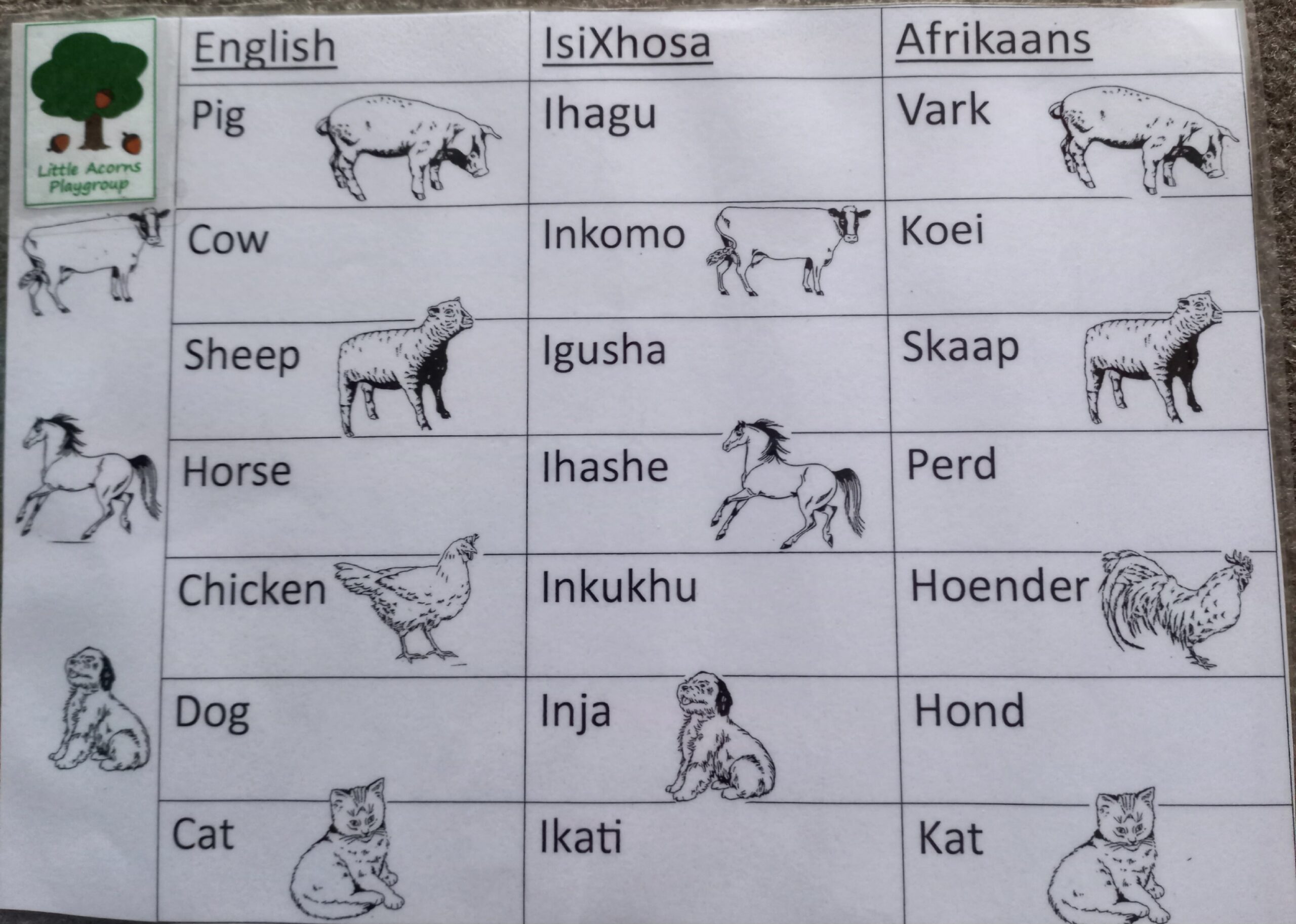
When introducing another language or new words and phrases, the sandwich method is very helpful. The new word, phrase or sentence is said ‘sandwiched’ between the language that the child understands. For example: good morning – molo – good morning. In this example ‘molo’ is the new word that is ‘sandwiched’.
- Songs
Singing and listening to songs is an enjoyable way to experience hearing and expressing language. Songs use different sound frequencies, as well as repetition, which are then ‘cemented’ into the mind on a subconscious level.
- Rhymes and nursery rhymes
Rhymes and nursery rhymes work in a manner similar to songs. The child hears and learns the sounds which are associated with the language. One can use rhyming words to reinforce the sounds of a language in a fun way. For example: MUG / BUG / HUG.
In Conclusion – Create a Rich Verbal Environment
Whether or not you are raising a multi-lingual child, remember the importance of the early years in developing foundations for language and communication.
One of the most important parts of learning to communicate with language is to have a rich verbal environment. This means that parents and caregivers should speak to their baby often, and use the correct language.
Choosing to raise a multi-lingual child or not will vary from family to family, and there are different ways in which this can be done.
Do your best not to put pressure on your child to talk. Toddlers who are under pressure to talk will usually experience some stress related to expressing themselves. And despite our well-meaning intentions to encourage them, the pressure almost always has the opposite effect with these children having delays in the onset of speech.
Language learning takes place all the time, whether you are playing with, talking to, reading for, or singing to your child. Make eye contact, use facial expressions and smile at your baby often in order to encourage their interest in communication.
Remember to enjoy this special time of deeping your bond with your child and supporting their development.
About the authors
Ofra Sharp
Ofra Sharp is the founder and owner of Little Acorns Play Group and Time2gether Activity Workshops. Ofra has many years of experience working with children of different ages, and their families. Ofra has a deep knowledge and understanding of the importance of early childhood development. Her qualifications include:
FDE Junior Primary (CCOE, UCT)
Advanced Play Therapy (Red Shoe)
Counseling 1 and 2, and trauma debriefing certificates (FAMtrac)
Ma’ayan Hamilton
Ma’ayan is a co-owner of LIttle Acorns Play Group where she is also involved as a teacher assistant. Ma’ayan qualified with a Bachelor of Science in Occupational Therapy in 2008, after which she furthered her studies as a TRE provider. Ma’ayan has a deep understanding of early childhood development, as well as the psychosocial needs of young children. Ma’ayan has three children of her own and has many years of hands-on experience with young children. Her qualifications include:
B.Sc. Occupational Therapy (University of Cape Town)
TRE provider (TRE Global Certification Training)