
The Importance of Tummy Time for Babies
You’ve probably heard of the term “tummy time”. But what exactly is tummy time, and why is it so important?
Let’s explore some of the reasons why it is recommended that babies spent time on their tummy, as well as the developmental issues that can arise if they don’t.
The consequences of not having tummy time
In 1992, research from The American Academy of Pediatrics concluded that if a baby doesn’t spend enough time on their tummy (“tummy time”) before the age of 12 months it can have a significant negative effect on their movement abilities later on..
They found that the areas most affected by a lack of tummy time were:
- Head control
- Neck control
- Shoulder girdle strength
- Arm strength
In addition, the ability of babies to crawl, sit and roll over was also negatively affected because of insufficient tummy time.
These babies showed delays in movement milestones, which led to further complications later on. Their balance, postural strength, fine motor strength, and gripp were all affected.
It was therefore recommended that a baby should be placed in prone – that means on their tummy – for a few minutes each day, from the first few days of their life.
The amount of time spent on their tummies should gradually be increased, with the aim of 60-80 minutes of awake time in total per day.
It was recommended that tummy time should be done for short periods throughout the day, taking into account each baby’s temperament and tolerance.
The benefits of tummy time
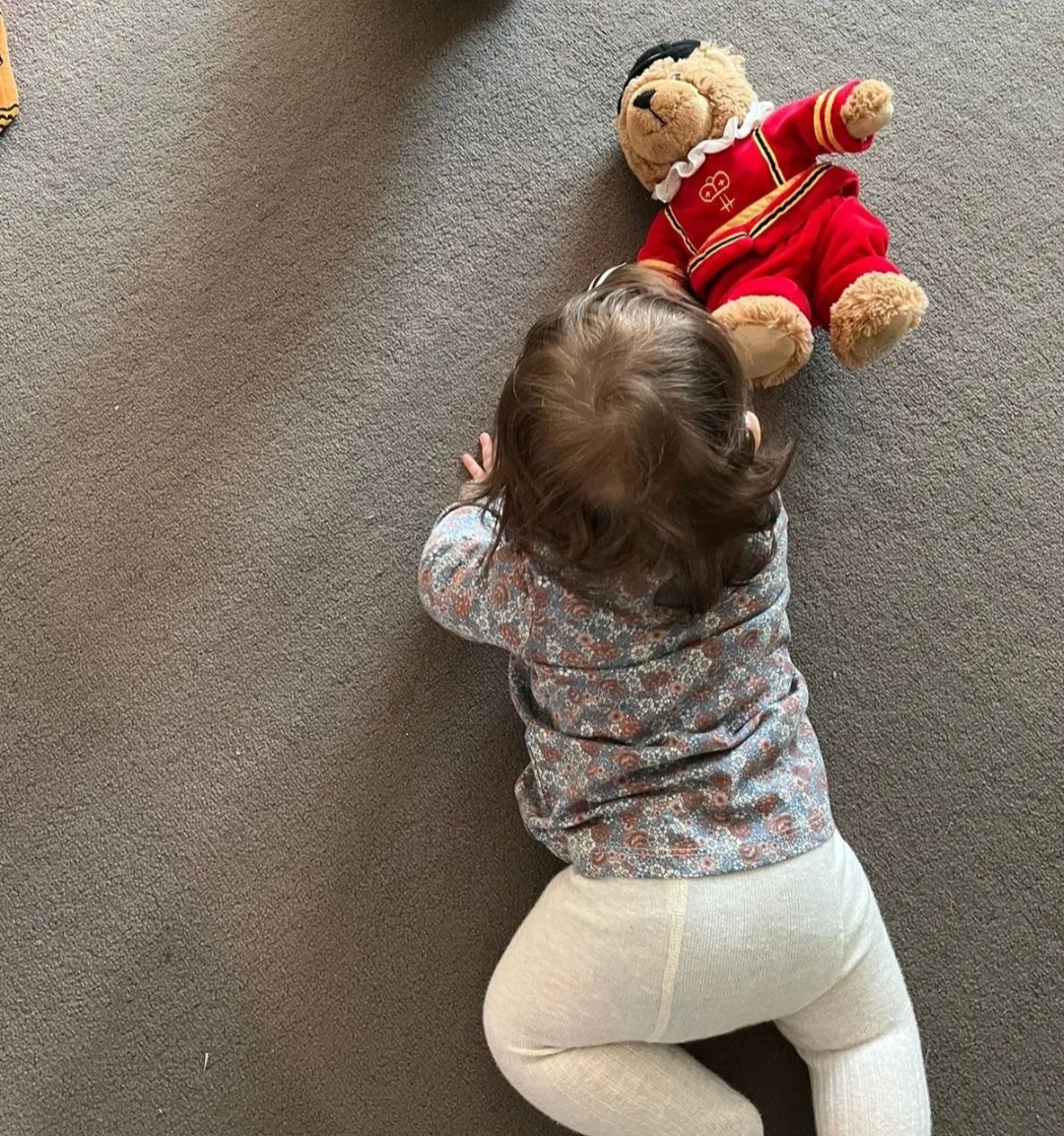
Every minute of tummy time is helping your baby gain control of their upper body and preparing them for rolling over and moving forward.
Tummy time is essential for the development of:
- Visual tracking
- Trunk rotation
- Weight shifting from hand-to-hand
- Weight shifting from arm-to-arm
- Strengthening of neck and arm muscle
All of these form the foundation on which later physical development occurs, making tummy time a necessity for your baby’s growth, development, and well-being.
Some ideas on how to encourage tummy time
Many babies will initially resist tummy time, as it does require extra effort for them while they develop their strength and stability.
Do not be surprised if your baby can only manage a couple of minutes at a time on their tummy, especially in the beginning. They may start to fuss or become agitated if they are not used to tummy time.
Here are some suggestions for how you can introduce your baby to tummy time, and also how you can engage with your baby so that you can prolong their tummy time as they get stronger:
- Place your baby in front of a mirror so that they can see their reflection when they look up.
- Place toys in front of your baby that they need to reach for – something that they like that they will be motivated to try and grab.
- Shake maracas in front of them to encourage them to lift their head to follow the sound.
- Place your baby on your chest while you are lying down – they will naturally want to look into your face which requires them to engage their neck muscles.
- Burp your baby over your lap.
- Hold or rock your baby in the prone position, while singing and walking around.
Remember that babies are naturally curious and want to engage with the things around them. Be playful and use some of the ideas above to ‘distract’ your baby from the physical exertion required of them during tummy time.
What about back time?
A lot of attention has been given to ensuring that babies spend enough time on their tummies, but what about time on their backs?
Placing your baby on their back so that they can play will strengthen their stomach muscles and help them with trunk control.
Your baby’s arms and legs are given the opportunity to interact and work together across their midline. This is good for them to do as it encourages bilateral co-ordination.
While your baby is lying on their back you can also playfully exercise their legs. Try bending one knee at a time, both together and bringing their opposite arm and foot to touch in the midline.
Moving objects in front of your baby is a great way to encourage visual tracking and side-to-side neck movements.
Singing and talking to your baby, while making eye contact, is calming and contributes to bonding. Use this time to model positive emotional responses for them, such as smiling and making happy sounds. Remember to model positive emotional responses such as smiling and making happy sounds.
A few words of caution about supported chairs
It is not recommended to keep your baby sitting in a supported chair for long periods of time. Unless it is absolutely necessary, try not to leave your baby in a car seat, ‘bambo’ chair, or rocking chair.
Sitting too early can cause pressure to be put on your baby’s spine and back muscles.
Sitting for long periods of time may also slow down the development of head control, and can lead to your baby missing out on vital movement experiences necessary for sensory-motor integration and learning.
Sitting in a walking ring can also inhibit your baby’s development if used excessively. It can lead to:
- Low muscle tone
- Poor hip development
- Walking on toes
- Refusal to crawl
Conclusion
Your baby’s development happens step-by-step, with each new milestone building on the previous ones.
It is therefore very important to encourage your baby to have sufficient tummy time before they start crawling or walking. Ideally, your baby should spend 60-80 minutes of their awake time on their tummy each day.
Your baby may only manage a few minutes at a time to start with, that’s absolutely fine. As they get stronger, try and increase the length of tummy time each day. Use playful games to distract your baby so that they are able to spend longer stretches of time on their tummies each day.
Leaving your baby in an upright chair for extended periods daily is discouraged. But do remember that your baby also needs to spend some time on their back each day. You can maximise the benefits for them by encouraging head movements and activities that engage their core muscles.